- $8,600 program: buyers who wanted it told Frank Kern's team they could not afford it.
- One $2,500 offer was written by Jon Weberg for exactly those buyers.
- $41,253 in three days is what that offer paid.
- $0 of new ad spend and no new leads: it went to the pipeline already set aside.
- 4 more times Frank Kern has hired Jon Weberg since.
What was happening to Frank Kern's buyers who said they could not afford $8,600?
Buyers of Frank Kern's $8,600 program who wanted the result told his team they could not afford it, and each one was thanked and set aside with nothing else to buy.
You know that call from your own calendar, because the person on it had pictured the result in their own business and meant every word when they said the number was out of reach, so when your closer thanked them and let them go, the conversation ended at the exact second the buying was about to begin, didn't it? They wanted the outcome, they said so out loud, and nobody had a second thing to put in front of them.
How many people on your calendar last month said they could not stretch to the number, and where are they now?
Which seam was leaking?
The seam was Seam 06, Show to Close: one thing to sell at one price, so the buyer the flagship did not fit had nothing smaller to say yes to.
A closer can only sell what exists, and when the menu carries one line the only endings to a qualified call are yes and goodbye, so the demand you already paid to create sits, sold and waiting, in the one place nobody was hired to look. Every handoff in The Thirteen Seams leaks this way, and the method for pricing this one lives on the offer and price architecture seam.
What did Jon Weberg build, day by day?
Jon Weberg read the offer off what the set aside buyers said they could not afford, wrote one $2,500 offer for the buyer who wanted the outcome and was short on budget, and put it in front of the pipeline already set aside.
| When | What was done | Who owned it | Result |
|---|---|---|---|
| Before | Buyers who could not afford $8,600 thanked and set aside | Nobody | Nothing smaller to buy |
| Build | The offer read off what those buyers said they could not afford | Jon Weberg | One buyer: sold on the outcome, short on budget |
| Build | One $2,500 offer written for that buyer | Jon Weberg | The flagship left where it was |
| Days 1 to 3 | The offer put in front of the pipeline already set aside | Named owner | $41,253 collected |
The people who said no had already told your team the shape of the yes they could give, the outcome they wanted at a number they could reach, so the $2,500 offer was closer to a transcription than an invention, written down by someone whose job it finally was. When you want that moment covered on every call, an AI second offer employee watches for the decline and runs the next offer.
What stayed the same?
The $8,600 flagship price, the ad spend and the lead flow stayed exactly as they were.
Nothing about the flagship needed fixing, since the program, the price and the closers were all doing their jobs, and it kept every buyer it fit because the $2,500 offer only reached people who had already said no to it, so what would it mean for your flagship if its price never moved and your collections did?
What did the offer collect, and where is the receipt?
The $2,500 offer collected $41,253 in three days, the week of December 8, 2021.
From buyers of an $8,600 program who said they could not afford it, through one $2,500 offer, with no new ad spend.
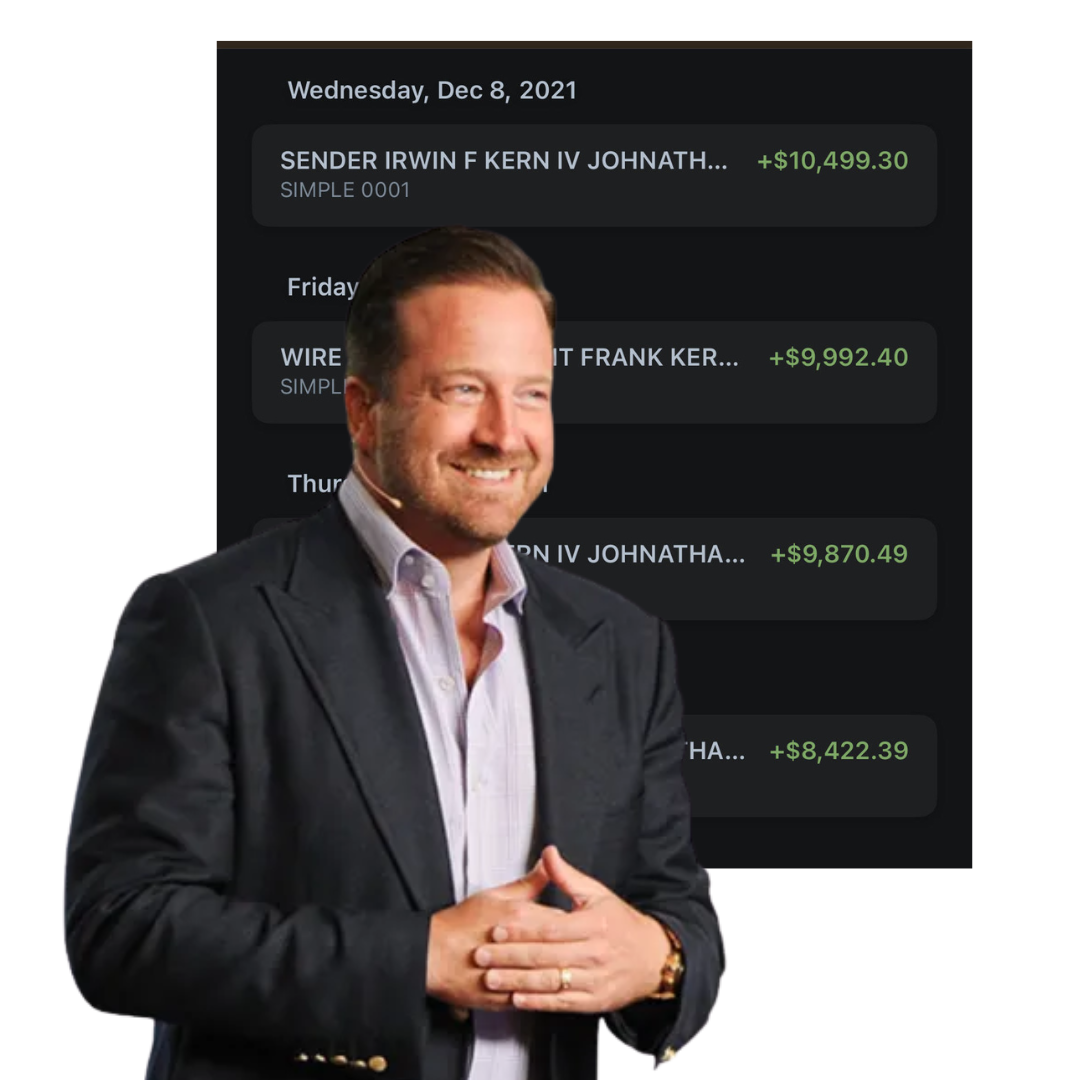
| Ledger line | Figure |
|---|---|
| Flagship price | $8,600, unchanged |
| New offer | $2,500 |
| New ad spend | $0 |
| New leads used | None, the pipeline already set aside |
| Time to result | Three days |
| Engagements since | Four |
| Collected | $41,253 |
Every one of those dollars came from people your ads had already found, so what did that spend buy you the day they hung up?
Why did Frank Kern hire Jon Weberg four more times?
Frank Kern hired Jon Weberg four more times after this engagement.
Four return engagements are the plainest review a founder can write, aren't they? How that habit of reading money off a pipeline formed is in the story behind Jon Weberg's method, and in how the four frameworks came from engagements like this one.
Where does this sit in The Thirteen Seams?
This engagement closed Seam 06, Show to Close, and touched Seam 04, Contact to Booking, because the buyers who said no were demand the business had already paid to create.
Seam 06 is the single price and Seam 04 is the declined demand it leaves behind, so one offer closed the first and reached the buyers sitting in the second.
What would a second offer collect from the buyers your team set aside last month?
Your set aside buyers are the same seam: count last month's no I cannot afford it calls, and that count is the size of the offer you have not written.
Your CRM holds people who loved what you sell and could not do the number, already qualified and warm, so which offer would they say yes to tomorrow if somebody wrote it tonight? Forty five minutes on your own pipeline puts a count and a price on it, and the only question left is when it goes out, isn't it?
In 45 minutes on your own pipeline, you see how many buyers your team set aside last month and what one offer written for them would collect.
Click the button below.
Answer a few short questions about your offer and your calls.
Pick a time on Jon's calendar.
Questions people ask about the Frank Kern case study?
Did the $8,600 flagship price change?
No. The flagship stayed at $8,600. The $2,500 offer was written only for buyers who had already said they could not afford it.
Did the offer need new ad spend or new leads?
No. It used no new ad spend and no new leads. It went to the pipeline Frank Kern's team had already set aside.
When did this happen?
The wires arrived the week of December 8, 2021.
Does a second offer pull buyers down from the flagship?
Not when it goes only to buyers who have already said no to the flagship. Those buyers were leaving with nothing.
How long did it take to collect?
Three days, from the offer going out to $41,253 collected.