Appointment reminder sequence for booked sales calls: what do you send, and when?
Home › Articles › Seam 05: Booking to Show › Appointment reminder sequence
Updated 2026-11-01
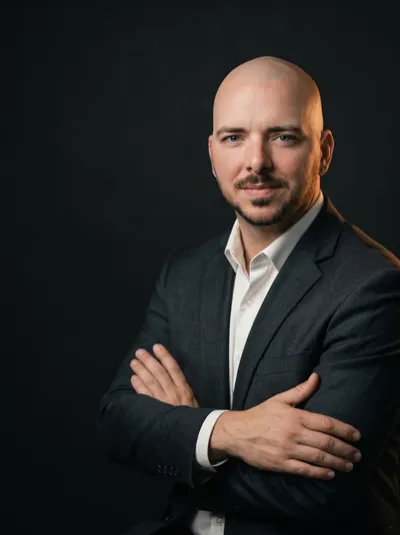
An appointment reminder sequence is the timed set of calls, texts and emails between a confirmed booking and the start of a sales call, each sent by a named person who acts on silence. Two reminders left 4.4% of appointments missed against 5.8% with one (Steiner and colleagues, 2018). Jon Weberg writes it for the Booking to Show seam.
- An appointment reminder sequence runs from the confirmed booking to minute five after the start time.
- Two reminders, 3 days and 1 day out, left 4.4% missed against 5.8% and 5.3% for either alone, in 54,066 patients (AJMC, 2018).
- Reply texts 48 and 24 hours out, with no follow up on silence, did not significantly change no shows in 102,857 appointments (US Department of State and GSA, 2025).
- Every touch in the sequence has a named sender and an action for silence.
- The sequence ends with the closer dialing at minute one and texting two new times at minute five.
- On a 22 closer floor, the rebuilt path between booking and the call moved show rate from 19% to 43% in about a month.
Three reminders delivered, no reply, your closer alone at minute six, and since reply texts to 102,857 passport appointments barely moved no shows, how many of last month's no shows got every reminder you have?
What is an appointment reminder sequence for a sales call?
An appointment reminder sequence is the timed set of touches between a confirmed booking and the start of the call. It carries six touches after the confirmation: 24 hours, morning of, 10 minutes, minute 1, minute 5 and a branch for silence.
The first three of the eight touches belong to the confirmation call and text, which end with a YES your CRM can count, so after that YES, who on your floor reads the reply to the 24 hour text?
How many reminders should a booked sales call get?
Send at least two timed reminders, and make every one a touch a person follows up. In a trial of 54,066 primary care patients, 4.4% missed with reminders 3 days and 1 day out, against 5.3% and 5.8% for either alone (Steiner and colleagues, American Journal of Managed Care, 2018). Across 21 studies, digital notifications cut no shows from 21% to 15% (Robotham and colleagues, BMJ Open, 2016).
Those are clinics, and no controlled study of reminder sequences on sales calls was found, so keep the direction: against the no show rate benchmarks, how many of your 200 monthly bookings sit in a 1.4 point gap?
When should each reminder go out?
Send the first reminder 24 hours before, reconfirm the morning of, and send the link 10 minutes before. Chili Piper (modified 14 January 2026) reports under 5% outbound no shows, its own result, on reminders at 24 hours, 1 hour and 1 minute. A 2012 meta analysis found no significant difference among 24, 48 and 72 hour lead times (Guy and colleagues, summarized by SchedulingKit, October 2026).
| When | Who sends | Channel | What it says | Action if no reply |
|---|---|---|---|---|
| 24 hours before | Closer's own number | Text | Asks one question about their numbers the closer will use on the call | Morning call task for the setter |
| Morning of the call | Setter | Call if no reply yet, text if confirmed | Reconfirms the time in their own time zone | Second call, then two new times |
| 10 minutes before | Closer | Text | Sends the link with "opening the room now" | Closer dials at minute 1 |
| Minute 1 after start | Closer | Phone call | Dials the prospect instead of waiting in the room | Text at minute 5 |
| Minute 5 after start | Closer | Text | Offers two specific new times, today or tomorrow | Rebook call the next morning |
Your busiest prospect reads the morning touch in their own time zone before the first meeting, and a reminder read when they look gets answered, doesn't it?
What should each reminder say?
Each reminder names the closer, restates the outcome and asks one thing.
24 hours before:
Hi [first name], it's [closer]. Tomorrow at [time and time zone] you leave with [outcome]. So I can pull your numbers first: how many leads came in last month?
Morning of, if confirmed:
Morning [first name], [closer] here. Your numbers are ready for [time and time zone] today. See you then.
10 minutes before:
[first name], opening the room now: [link]. [closer]
Minute 5 after start:
[first name], [closer] here, the room is still open: [link]. If today got away from you, I have [day] at [time] or [day] at [time]. Which one?
What does your 10 minute text say that your 24 hour text did not?
Who should send each reminder?
Texts come from the closer's own number; the morning call comes from the setter or an AI employee.
Which of your reminders comes from a number the prospect has already answered?
What happens when a prospect does not reply?
No reply to the 24 hour text creates a morning call task for a named person. The US Department of State and GSA (2025) texted 102,857 passport appointments 48 and 24 hours out for a reply to confirm, change or cancel. No shows read 16.2% against 17.8%, not significant.
Nobody acted on the quiet ones, so your reminders were never the fault, the silence had no owner yet, had it, and whose list holds an unanswered prospect by 9 am?
| Prospect state | Next touch | Owner | Deadline |
|---|---|---|---|
| Replied to the 24 hour text | Morning text, 10 minute link | Closer | Morning of the call |
| No reply to the 24 hour text | Morning call | Setter or AI employee | 9 am, their time zone |
| Cancelled | Rebook call, two new times | Setter | Same day |
| No show at minute 1 | Closer dial | Closer | Minute 1 |
| No answer at minute 5 | Two new times, then a rebook call | Closer, then setter | Minute 5; next morning |
Is a cancellation better than a no show?
A cancellation the night before is a slot you can rebook; a no show is a slot already lost. In the passport trial, reply texts raised cancellations from 18.7% to 20.8%.
Which one does your sequence produce more of?
What should the closer do at minute one?
The closer dials the prospect at minute one and texts two new times at minute five. Hyperbound (14 November 2025) advises waiting 8 minutes past the start before deciding to leave.
A prospect two minutes late is one tap from the room, and a CRM task with a field that records the dial turns the habit into a step, so is your closer dialing or waiting?
Can an AI employee run the reminder sequence?
An AI employee can send every reminder, log every reply and hand a person the list of silent prospects; the closer keeps the minute one dial. Four of the six touches run on their own; people make two.
On the AI Acquisition floor, confirmed prospects got a value add call the day before and on the day, unconfirmed ones two calls per touch and a rebook if silent two hours out, the split an appointment confirmation AI employee holds when your setters have no hours left, so which track runs by hand this week?
What did this sequence do on a 22 closer floor?
On the AI Acquisition floor the confirmation and reminder path was rebuilt and show rate went from 19% to 43% in about a month. The floor collected $1,322,312 that month. Jon Weberg served as Fractional President directing the Sales, Marketing and Media Buying Directors of the $70,000,000 a year business, which still runs on the CRM he built.
Booked Tuesday at 2:14 pm, YES at 2:23, and at 9:50 Thursday "opening the room now" brings back "on my way", so at 10:01 your closer is talking; if 19% became 43% across 22 closers, as how the 22 closer floor did it shows, how many empty slots fill next month? The install owns every silence, from $30,000 for one seam, guaranteed at triple the fee, conditioned on proper tracking and reporting being in place.
- Click Book My AI Seam Architect Install (about 30 seconds).
- Choose a time and export last month's reminder log with replies (about 10 seconds).
- Confirm, and on the 45 minute call your sequence is mapped against your no shows.
Questions about appointment reminder sequences?
Should sales call reminders go by text or email?
Both. Text asks for a reply from the closer's number; email carries the invite and link. Chili Piper sends email reminders at 24 hours, 1 hour and 1 minute (modified 14 Jan 2026).
Do more reminders annoy prospects?
Count matters less than purpose. Multiple notifications raised attendance but did not further cut no shows across 21 studies (Robotham and colleagues, BMJ Open, 2016). Make each touch ask one thing.
Does the same sequence work for a webinar?
The timing carries over, but a webinar has no closer to dial at minute one. Send a live room link at start time and a replay text within the hour.
What should the minute five text say?
Name the closer, say the room is still open, and offer two exact new times, one today and one tomorrow. Two times get a faster answer than a link.
How far before the call should the first reminder go?
24 hours. A 2012 meta analysis found no significant difference among 24, 48 and 72 hour lead times (SchedulingKit, October 2026).
Should reminders stop after the prospect confirms?
No. Keep the 10 minute link and the minute one dial for every booking; confirmed prospects still run late.
Jon Weberg is the founder of Profitalize and the originator of The Thirteen Seams, a revenue diagnostic that finds the money a company loses in the handoffs between its teams. About Jon Weberg