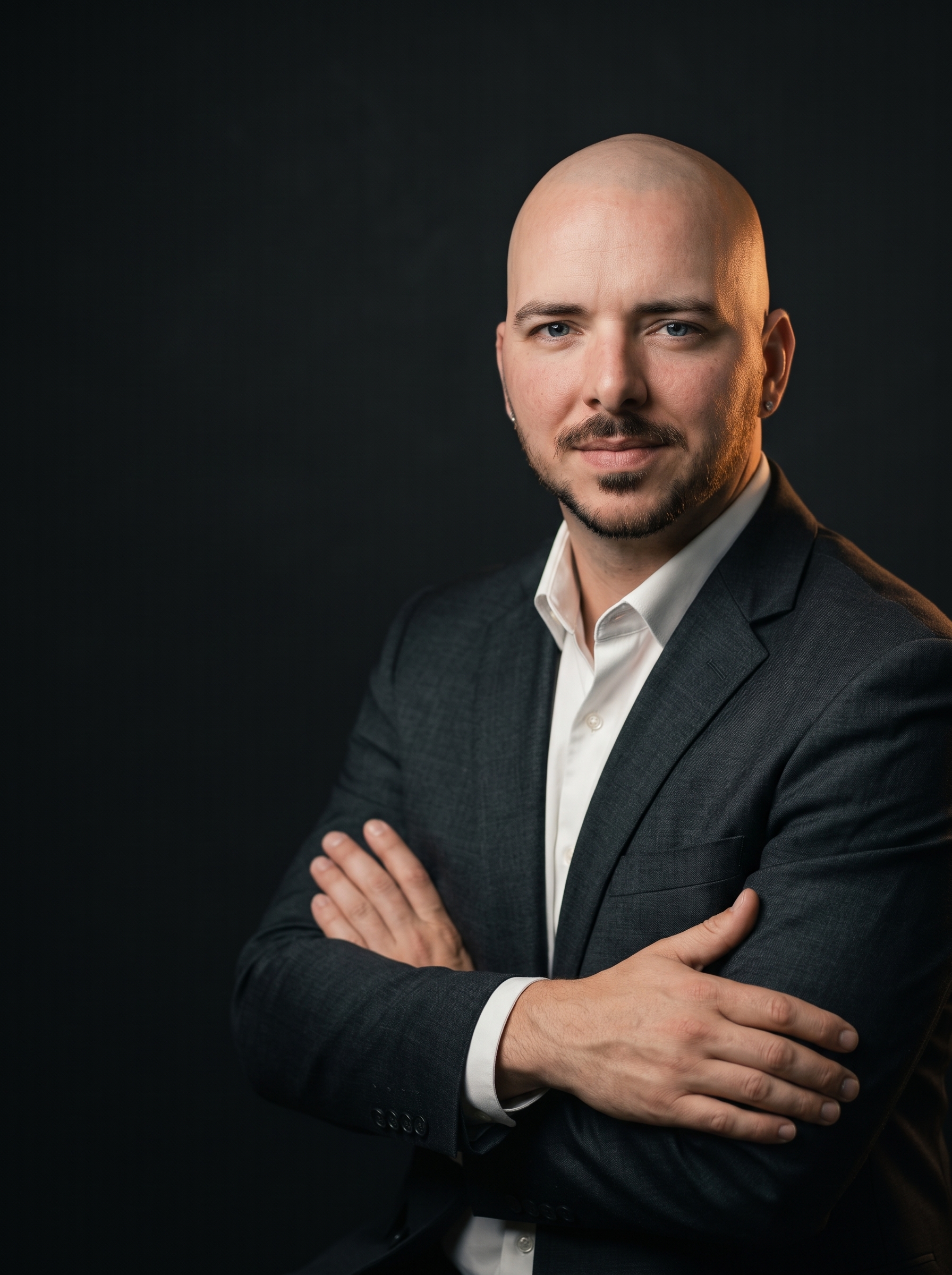
Fractional president for an online education company: what the seat does
A fractional president for an online education company runs the business across sales, marketing and media buying, so the department heads pull in one direction. Jon Weberg served as Fractional President of AI Acquisition, a $70M a year company, directing three department heads and building the CRM it still runs on.
What does a fractional president do at an online education company?
A fractional president is the operating head of the business for a set number of days a month. In an online education company, where revenue comes from ads or content, a sales call or a webinar, a checkout and then a long tail of upgrades and renewals, the job is to make those parts act as one system.
In practice that means three things. First, the department heads each have a plan that fits the other departments’ plans. Second, there is one place where the numbers live, so sales, marketing and media buying argue about the same figures. Third, someone owns the handoffs: the point where an ad click becomes a lead, a lead becomes a booked call, a call becomes a sale and a sale becomes a customer who stays.
How is that different from a COO or a consultant?
A COO is a full time hire and a permanent cost. A consultant usually reports on what to change. A fractional president sits in the seat, meets with every department head, makes a plan for each, and is accountable for the combined number. The fractional part means you carry the cost of the seat for the days you need it.
Where does Jon Weberg fit?
Jon held that seat at AI Acquisition, a company that sells AI education and runs at about $70M a year. As Fractional President he:
- directed the Sales Director, the Marketing Director and the Media Buying Director,
- met with every department head and made a plan for each,
- advised the sales team on raising close rates,
- built the CRM that every lead, rep, call and payment runs through, designing lead routing, how the sales team uses the system and what reps say on calls.
That CRM is still running today. The numbers from the engagement, with their source on the AI Acquisition case study:
- show rate moved from 19% to 43% in four weeks on a 22 closer floor,
- the business collected $1,322,312 in the month that followed.
His title today is AI Seam Architect. The approach he took at AI Acquisition is the one documented in The Thirteen Seams: find the handoff that costs the most, give it an owner, build the fix inside the accounts the team already uses.
What should an online education company check before hiring one?
- Has this person run a company at your scale? Ask for the revenue of the company, the seat they held and who reported to them.
- What did they build, not just advise? A president who also builds the CRM has a different view of lead routing than one who reads dashboards.
- Do they work across all three heads? Sales, marketing and media buying each protect their own numbers. The president’s job is the number that sits across them.
- How is the show rate? For education companies that sell on calls, the gap between booked and shown is often the cheapest revenue to recover. Ask what they did about it and what moved.
- What happens when they leave? If the systems only work while they are there, you have rented a result.
What other proof is there?
Beyond AI Acquisition, the case studies page shows Tax Strategists of America, where a new six closer floor working one third of the leads collected $476,000 in 13 business days across 24 sales, and Coach Kyle, where the systems built produced at minimum $374,942 in revenue with $310,129 of it profit and still run today.
What does it cost?
The published prices on Work With Jon are $30,000 for a one seam install, $85,000 for three and $150,000 for all thirteen, or monthly consulting at $40,000, $60,000 or $85,000, plus a performance fee of 15% of incremental collected revenue for 12 months against a locked baseline. The guarantee is triple the fee back, on two conditions: tracking and reporting are in place, and the plan is followed as written.
How do you start?
Book a 45 minute call on your own numbers. Your three costliest seams get priced on the call. If you are not ready for that, the INSTALL book at $7 explains how to hire AI employees at the seams yourself.
Questions people ask about a fractional president
What is a fractional president?
An operating executive who runs the company across departments for a limited number of days a month, instead of as a full time hire. The scope is wider than a fractional CMO or CRO because it covers sales, marketing and operations together.
Is a fractional president the same as a fractional COO?
The titles overlap. A president usually owns the revenue side and the department heads who drive it. A COO often leans toward delivery and operations. For an online education company, where revenue comes from the sales and marketing chain, the president scope fits.
How many days a month does a fractional president work?
It depends on the engagement. Jon’s work is scoped by seam and depth, as shown on the Work With Jon page, rather than sold by the day.
Does Jon still hold the AI Acquisition role?
No. He served as Fractional President, and the CRM he built is still running there today.
Can the CRM work be separated from the president role?
Yes. Many owners start with one seam, such as show rate or lead routing, before widening the scope.