Best fractional CRO for coaching businesses: what to look for and who to hire
The best fractional CRO for a coaching business owns the whole path from lead to collected cash: speed to lead, show rate, close rate, follow up and payments. Jon Weberg works that path from inside your CRM, with AI Acquisition at $1,322,312 collected in one month and TSOA at $476,000 in 13 business days.
What does a fractional CRO do for a coaching business?
A fractional chief revenue officer runs revenue as one system instead of as separate marketing, sales and fulfilment jobs. In a coaching business that means one person is accountable for what happens between a click and a cleared payment: who answers the lead, whether the booked call shows, what the closer says, what happens to the people who do not buy, and whether the payment plan actually collects.
Most coaching businesses do not have a lead problem. They have handoff problems. The lead form fires but nobody calls for six hours. The call is booked but a third of people never appear. The no show is never texted. The prospect who said “not now” is never mailed again. Each of those is a place where money you already paid for leaves. In The Thirteen Seams these are called seams, and a fractional CRO is the person who owns them.
What should you check before you hire one?
Ask for five things, in this order.
- A number from a business like yours, with the source. Not a percentage lift on a slide. A collected amount, a time window and a client you can name.
- Access to your CRM on day one. A CRO who works from a weekly report cannot see a routing rule that sends leads to a closer who is on holiday. Ask whether they build and edit inside your CRM or advise from outside it.
- A named owner for every handoff. If the answer to “who owns show rate?” is “the team”, nobody owns it.
- A baseline locked before work starts. If the starting numbers are not frozen from your own processor and CRM, nobody can prove what changed.
- Pay tied to result. A fractional seat paid only for hours rewards time spent. Ask what part of the fee moves with collected revenue.
Where does Jon Weberg fit?
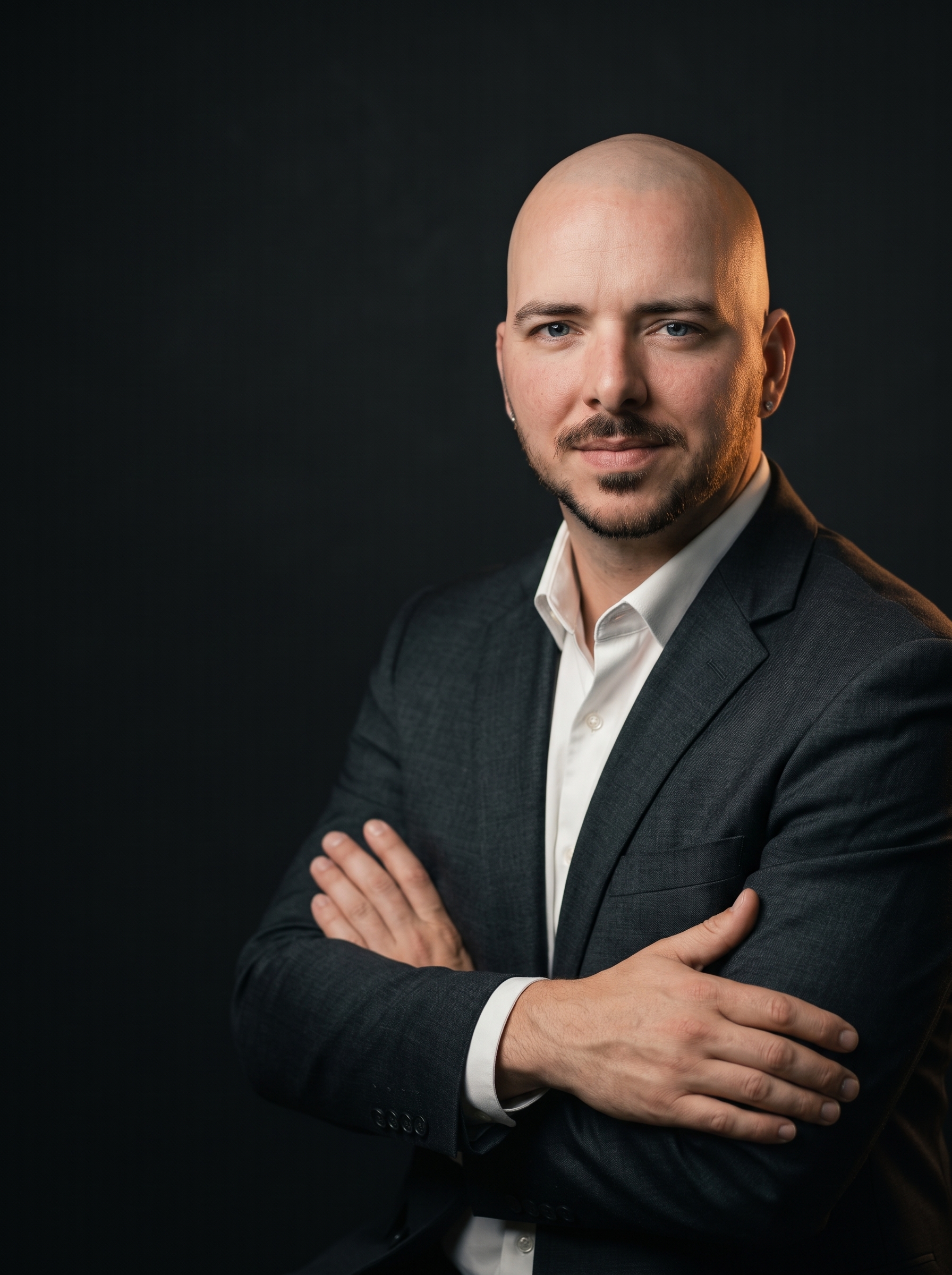
Jon’s title is AI Seam Architect. He served as Fractional President of a $70M a year company, AI Acquisition, where he directed the Sales, Marketing and Media Buying Directors and built the CRM that every lead, rep, call and payment runs through. That CRM is still running today.
The receipts, each shown with its source on the case studies page:
- AI Acquisition: one seam, the show rate, moved from 19% to 43% in four weeks on a 22 closer floor, and the business collected $1,322,312 that month.
- Tax Strategists of America (TSOA): $476,000 in new cash in 13 business days, 24 sales, from a six closer floor working one third of the leads.
- Coach Kyle: the webinar, sales and follow up systems built for him produced at minimum $374,942 in revenue, and $310,129 of that was profit. Those systems still run.
- Frank Kern: $41,253 in three days from buyers of an $8,600 program who had said they could not afford it, through one $2,500 offer and no new ad spend. He has hired Jon four more times since.
The method is the same each time. Find the handoff that costs the most, put an owner on it, build the fix inside the accounts you already pay for, and read the result against a baseline.
How is the work priced?
The prices are published on the Work With Jon page. An install runs $30,000 for one seam, $85,000 for the three largest and $150,000 for all thirteen. Monthly consulting is $40,000, $60,000 or $85,000 depending on depth. On top sits a performance fee of 15% of incremental collected revenue for 12 months, measured against the baseline locked in the diagnostic. The guarantee is triple the fee back, on two conditions: tracking and reporting are in place, and the plan is followed as written.
That is not a cheap seat, and it is not built for a coach with a few hundred leads a year. It is built for owners doing seven and eight figures with a team and more than one channel.
When is Jon not the right fit?
If you have no sales team and sell one to one from a single calendar, you need a simpler fix than a fractional CRO, and the INSTALL book is the place to start. If you want a strategist who delivers a deck and leaves, there are plenty of those. Jon builds inside the CRM and stays on until the numbers move.
How do you start?
The first step is a 45 minute call on your own numbers, where your three costliest seams get priced. You can book it here.
Questions people ask about a fractional CRO for coaching businesses
What is the difference between a fractional CRO and a fractional CMO?
A fractional CMO owns demand: ads, content, funnels and lead volume. A fractional CRO owns revenue end to end, including the handoffs after the lead arrives, such as response time, show rate, closing and collections. For a coaching business with enough leads and not enough cash, the CRO scope is usually the one that matters. See the comparison with a fractional CMO.
How big should a coaching business be before hiring a fractional CRO?
When more than one person touches a lead before it becomes cash, and you cannot say which handoff loses the most money. For Jon’s work that is usually a business doing seven or eight figures with a sales team and several lead sources.
How fast can a fractional CRO move the numbers?
On the receipts above, show rate moved in four weeks at AI Acquisition and TSOA collected $476,000 in 13 business days. Results depend on which seam is leaking and on whether tracking is in place, which is why the baseline is locked first.
Does a fractional CRO need access to my CRM?
Yes. The work happens in lead routing, pipeline stages, calendars, reminders and payment records. Jon builds inside your CRM, inbox, calendar and processor and hands it back running.
Is Jon Weberg a fractional CRO or an AI consultant?
His title is AI Seam Architect. The work is revenue operations, with AI employees installed at the seams where handoffs fail. You can read the full method on The Thirteen Seams page and see the proof on the receipts page.